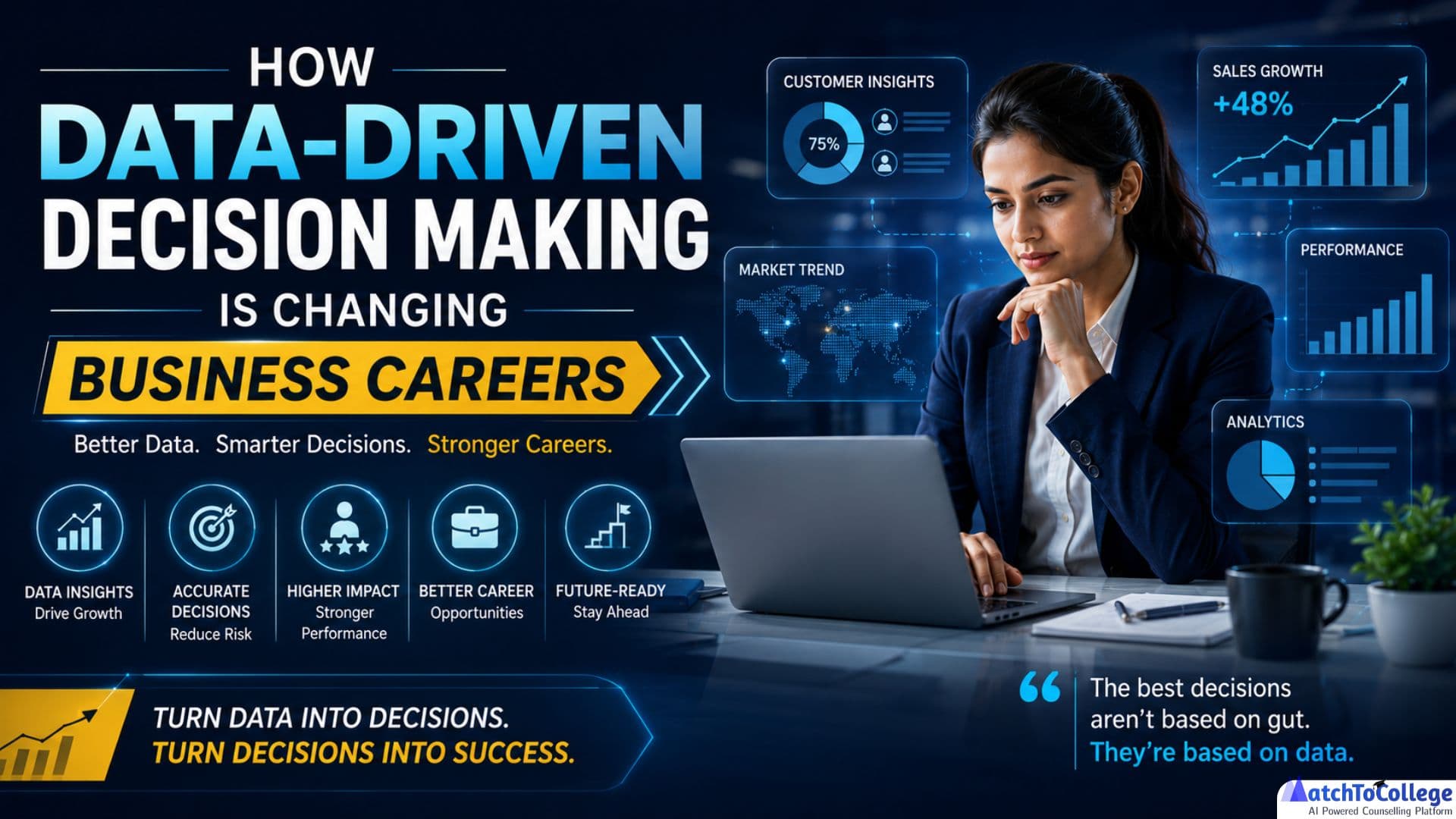
Every business generates data—from customer interactions and sales transactions to website traffic, inventory levels, and employee performance. Yet, collecting information alone doesn't create value. The real advantage comes from transforming data into actionable insights that drive smarter decisions. This is why Data-Driven Decision Making has become one of the most important strategies for modern organizations.
Businesses that rely on facts rather than assumptions are better equipped to identify opportunities, reduce risks, optimize operations, and respond quickly to changing market conditions. Whether you're a startup, a growing enterprise, or a global corporation, adopting data-driven decision making is no longer optional—it's essential for long-term success.
This comprehensive guide explores why Data-Driven Decision Making Is the Future of Business, the technologies that make it possible, practical implementation strategies, and the benefits organizations can expect.
Quick Facts
• Primary Keyword: Why Data-Driven Decision Making Is the Future of Business
• Reading Time: 11–13 minutes
• Best For: Business owners, executives, CIOs, CTOs, operations managers, marketing leaders, entrepreneurs, and decision-makers
• Core Topics: Data-driven decision making, business intelligence, data analytics, Artificial Intelligence, predictive analytics, digital transformation, business performance, cloud computing, big data, and business automation
• Goal: Learn how leveraging business data leads to better decisions, increased efficiency, and sustainable growth.
Why Businesses Can No Longer Rely on Guesswork
Markets move faster than ever before. Customer preferences evolve quickly, competition intensifies, and new technologies reshape industries almost overnight.
In this environment, relying solely on experience or intuition can lead to costly mistakes.
Data-driven decision making enables organizations to evaluate real-time information before making strategic, operational, or financial decisions.
Instead of asking, "What do we think will happen?" businesses begin asking, "What does the data tell us?"
This shift leads to:
- Better business performance
- Improved operational efficiency
- Faster strategic decisions
- Reduced business risk
- Higher customer satisfaction
- More accurate forecasting
- Sustainable competitive advantage
Organizations that consistently use data outperform those relying primarily on assumptions.
Statistics Snapshot
| Business Data Insight | Industry Trend |
|---|---|
| Organizations investing in data analytics | More than 85% globally |
| Companies using Artificial Intelligence for decision support | Growing by over 25% annually |
| Enterprises adopting Business Intelligence platforms | More than 70% |
| Businesses prioritizing digital transformation | Nearly 90% |
What Is Data-Driven Decision Making?
Data-Driven Decision Making (DDDM) is the process of making business decisions based on verified information, analytics, and measurable evidence rather than intuition alone.
Organizations collect data from multiple sources, including:
- Customer interactions
- Sales reports
- Financial systems
- Website analytics
- Marketing campaigns
- Inventory management
- Supply chain operations
- Employee performance
- IoT devices
Using Business Intelligence, data analytics, and Artificial Intelligence, this information is transformed into insights that guide smarter decisions.
Why Data Is Becoming the Most Valuable Business Asset
In today's digital economy, data is often compared to fuel—but unlike fuel, its value increases when used effectively.
Businesses that build strong data management capabilities can:
- Predict customer behavior
- Improve product development
- Optimize pricing strategies
- Personalize customer experiences
- Reduce operational inefficiencies
- Detect risks earlier
- Discover new revenue opportunities
Rather than reacting to problems, data-driven organizations anticipate them before they occur.
Comparison Table: Traditional Decision-Making vs Data-Driven Decision Making
| Traditional Decision-Making | Data-Driven Decision Making |
|---|---|
| Based primarily on experience | Based on verified business data |
| Limited visibility | Real-time insights |
| Reactive planning | Predictive decision-making |
| Manual reporting | Automated dashboards |
| Higher uncertainty | Better forecasting accuracy |
| Slower response to change | Faster business agility |
The Technologies Powering Data-Driven Businesses
1. Business Intelligence (BI) Transforms Data into Insights
Business Intelligence platforms help organizations organize, visualize, and analyze information through interactive dashboards and reports.
Common BI capabilities include:
- KPI monitoring
- Sales performance tracking
- Financial reporting
- Customer analytics
- Executive dashboards
- Operational insights
Decision-makers gain a clear understanding of business performance without manually compiling reports Business Intelligence & Analytics Services
2. Artificial Intelligence Enhances Predictive Decision-Making
Modern Artificial Intelligence (AI) doesn't just analyze historical information—it predicts future outcomes.
Businesses use AI for:
- Demand forecasting
- Customer segmentation
- Fraud detection
- Predictive maintenance
- Sales forecasting
- Intelligent recommendations
AI helps organizations identify trends that would be difficult for humans to detect manually AI Development Services
Statistics Snapshot
| AI & Analytics Capability | Business Benefit |
|---|---|
| Predictive analytics | Better forecasting |
| Customer analytics | Improved personalization |
| Automated reporting | Faster decisions |
| AI-powered insights | Increased operational efficiency |
3. Cloud Computing Makes Data Accessible
Modern cloud computing enables businesses to access and analyze information from anywhere.
Cloud platforms provide:
- Scalable storage
- Secure collaboration
- Faster processing
- Real-time reporting
- Lower infrastructure costs
- Business continuity
Cloud-based analytics ensure decision-makers always have access to current information.
4. Big Data Expands Business Intelligence
Organizations now process enormous volumes of structured and unstructured information.
Big Data technologies help businesses analyze:
- Customer behavior
- Social media trends
- Website interactions
- Supply chain performance
- Sensor data
- Market intelligence
Large datasets often reveal valuable opportunities that smaller datasets cannot.
How Data-Driven Decision Making Improves Business Performance
Better Customer Experiences
Businesses understand customer preferences more accurately through customer analytics, allowing them to personalize products, services, and communication.
Faster Operational Decisions
Real-time dashboards reduce delays by providing immediate visibility into business performance.
Smarter Financial Planning
Organizations improve budgeting, forecasting, and investment decisions using accurate financial data.
Improved Marketing Performance
Marketing teams optimize campaigns based on measurable customer engagement rather than assumptions.
Higher Operational Efficiency
Workflow automation, analytics, and performance monitoring reduce waste while improving productivity.
Real-World Example
Imagine a nationwide retail company operating hundreds of stores.
Previously, inventory decisions were based largely on historical sales reports and manager estimates.
After implementing Business Intelligence, predictive analytics, and Artificial Intelligence, the retailer begins analyzing customer purchasing patterns in real time.
The results include:
- More accurate inventory forecasting
- Reduced stock shortages
- Lower excess inventory costs
- Better pricing strategies
- Increased customer satisfaction
- Higher overall profitability
Rather than responding after problems occur, the business proactively adjusts operations based on live data.
Myth vs Reality
| Myth | Reality |
|---|---|
| Data-driven decision making removes the need for human expertise. | Data supports better decisions, while human judgment remains essential. |
| Only large enterprises can benefit from analytics. | Businesses of all sizes can use cloud-based analytics platforms. |
| More data automatically means better decisions. | High-quality, relevant data matters more than volume. |
| Data analytics is only useful for IT departments. | Every department—from sales to HR—benefits from data-driven insights. |
Statistics Snapshot
| Business Analytics Capability | Expected Outcome |
|---|---|
| Real-time dashboards | Faster executive decisions |
| Predictive forecasting | Better business planning |
| Customer behavior analysis | Improved customer retention |
| Data visualization | Enhanced strategic decision-making |
Building a Data-Driven Business Culture
Technology alone doesn't create data-driven organizations.
Success also requires the right culture.
Businesses should:
Step 1: Define measurable business objectives.
Step 2: Collect reliable, high-quality data.
Step 3: Centralize business information.
Step 4: Implement Business Intelligence tools.
Step 5: Train employees to interpret analytics.
Step 6: Encourage evidence-based decision-making.
Step 7: Continuously measure outcomes and refine strategies.
Organizations that embed data into everyday decision-making consistently achieve stronger long-term results.
Common Challenges Businesses Face
Adopting data-driven decision making isn't without obstacles.
Common challenges include:
- Poor data quality
- Disconnected business systems
- Data privacy concerns
- Limited analytics skills
- Resistance to organizational change
- Legacy infrastructure
- Lack of executive alignment
Addressing these issues early helps organizations maximize the value of their data investments.
Best Practices for Long-Term Success
To build a successful data-driven organization:
- Align analytics initiatives with business goals.
- Invest in scalable cloud computing infrastructure.
- Integrate systems to eliminate data silos.
- Prioritize data governance and security.
- Use Artificial Intelligence to enhance insights.
- Monitor KPIs continuously.
- Foster a culture of continuous learning and improvement.
Successful businesses don't just collect data—they transform it into competitive advantage.
Key Takeaways
- Why Data-Driven Decision Making Is the Future of Business lies in its ability to replace assumptions with measurable insights.
- Business Intelligence, Artificial Intelligence, predictive analytics, cloud computing, and big data enable faster and more informed decisions.
- Data-driven organizations improve customer experiences, operational efficiency, and long-term profitability.
- Building a data-driven culture requires both technology and organizational commitment.
- Businesses that invest in analytics today are better prepared for tomorrow's challenges and opportunities.
Frequently Asked Questions
What is data-driven decision making?
Data-driven decision making is the process of using accurate business data, analytics, and measurable insights to guide strategic and operational decisions instead of relying solely on intuition.
Why is data-driven decision making important?
It improves decision accuracy, reduces business risk, enhances customer experiences, supports operational efficiency, and enables organizations to respond quickly to market changes.
Which technologies support data-driven decision making?
Key technologies include Business Intelligence, Artificial Intelligence, predictive analytics, cloud computing, big data, data visualization, and business automation.
Can small businesses benefit from business analytics?
Yes. Modern cloud-based analytics platforms make Business Intelligence and data analytics accessible and affordable for businesses of all sizes.
How do businesses begin implementing a data-driven strategy?
Organizations should define clear objectives, improve data quality, integrate systems, adopt analytics platforms, train employees, and continuously monitor performance using meaningful KPIs.
Conclusion
Data-Driven Decision Making is transforming how businesses compete, innovate, and grow. Organizations that combine Business Intelligence, Artificial Intelligence, predictive analytics, cloud computing, and high-quality data gain deeper insights into customer behavior, operational performance, and future opportunities.
Rather than relying on instinct alone, successful businesses make informed decisions backed by evidence. As digital transformation accelerates across industries, companies that embrace data-driven strategies will be better positioned to improve efficiency, strengthen customer relationships, reduce risk, and achieve sustainable long-term success.